
Cricket Art
Prompt Features Explanation:
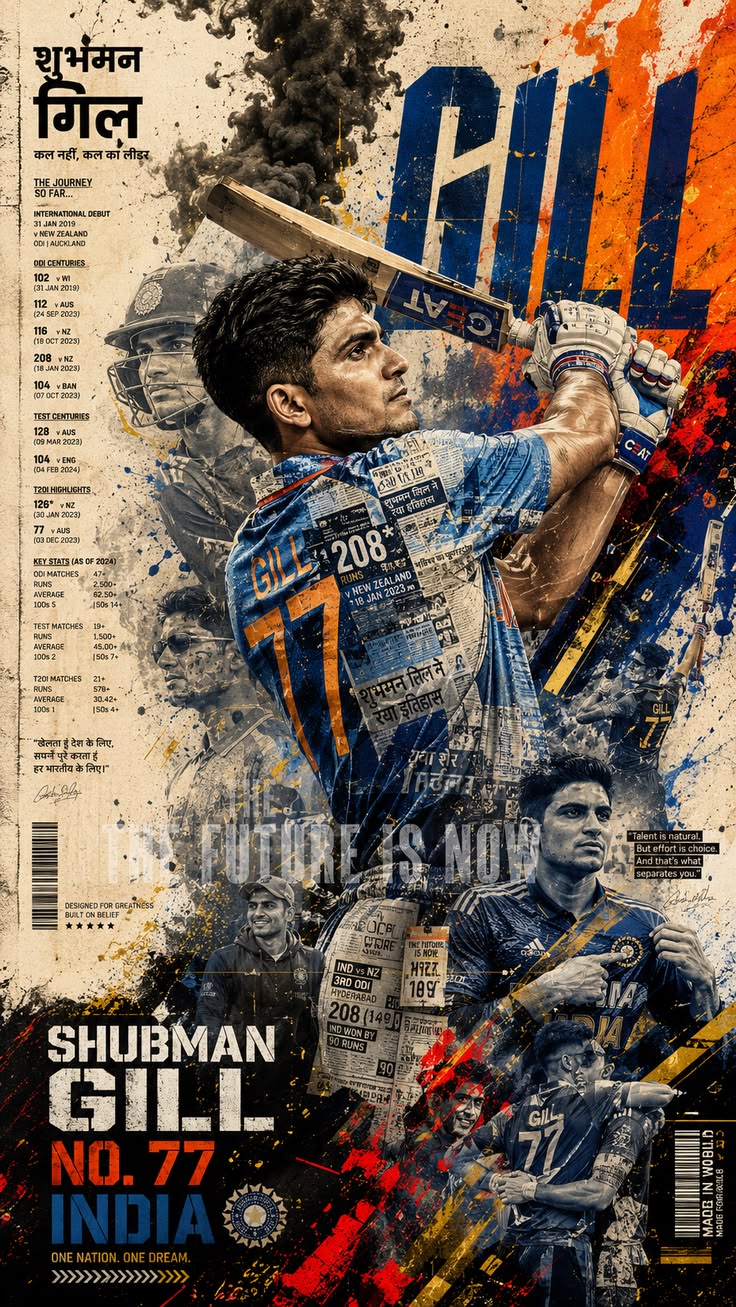
Cricket Art is a premium sports-inspired visual concept that combines energetic athletic action with editorial magazine styling, distressed print textures, archival paper effects, and layered storytelling. Instead of presenting a single sports portrait, this composition develops the complete visual identity of one athlete through multiple coordinated portraits arranged within a dramatic vertical collage. Every visual element contributes to the feeling of determination, achievement, history, and national pride while maintaining a polished artistic presentation.
The primary subject is a single male athlete who appears consistently throughout the composition. Although multiple portraits are visible, each one represents the same individual viewed from different moments, expressions, and camera perspectives. This consistency creates the impression of an athlete’s complete journey rather than a collection of unrelated photographs. Maintaining recognizable facial identity across every portrait gives the artwork authenticity and emotional continuity.
The largest portrait dominates the composition through a powerful batting follow-through. The athlete’s upper body rotates naturally while both gloved hands remain firmly connected to the cricket bat. Raised elbows, twisted shoulders, and focused eyes communicate movement without exaggeration. Instead of relying on unrealistic muscular proportions, the athletic appearance comes from believable posture, body mechanics, and equipment interaction.
Supporting portraits provide visual storytelling. A helmeted close-up communicates concentration before the shot. Another monochrome portrait introduces reflection and determination. Additional standing and profile views reveal different emotional moments while preserving the same identity. Together these portraits create the feeling of a sports biography condensed into a single editorial page.
Body proportions remain realistic throughout the entire composition. Shoulder width, arm size, torso build, waist shape, and overall height impression remain natural in every portrait. This realistic body treatment ensures the artwork celebrates athletic performance rather than unrealistic physical exaggeration. The poses communicate strength through movement and technique instead of excessive muscular definition.
The cricket uniform becomes one of the strongest visual anchors. A vivid blue jersey enriched with darker navy panels and energetic orange accents immediately establishes the sporting theme. Fabric folds, realistic stitching, printed graphics, and reflective highlights create convincing material texture. White batting gloves featuring blue and red accents wrap naturally around the wooden bat, emphasizing believable sports equipment interaction.
The bat itself introduces another important visual element. Its polished wooden surface reflects warm highlights while preserving realistic grain and texture. Together with the gloves and jersey, the sporting equipment reinforces authenticity throughout the composition.
Unlike a traditional clean studio background, this design relies on an aged archival paper surface. Warm cream tones, distressed paper fibers, scratches, stains, worn edges, dust particles, faded ink, and weathered textures create the impression of an old sports archive rediscovered and artistically restored. These imperfections add personality while strengthening the editorial atmosphere.
Mixed-media collage techniques introduce remarkable visual depth. Torn newspaper fragments, scorecards, match statistics, editorial headlines, printed numbers, halftone portraits, photocopy textures, dry brush effects, paint splashes, ink drips, charcoal marks, and layered paper elements overlap naturally across the composition. These details prevent the artwork from appearing digitally assembled and instead produce a handcrafted premium finish.
Large typography further enhances the editorial identity. Bold distressed lettering appears integrated directly into the layered paper rather than floating independently above it. The combination of strong condensed fonts, textured print effects, and weathered surfaces gives the design the appearance of an authentic sports publication.
A dramatic smoke plume rises behind the upper section, creating additional depth while separating the central athlete from the background. Dynamic blue, orange, black, red, and yellow paint splashes travel diagonally across the composition, visually reinforcing the direction of the batting swing. This coordinated movement guides the viewer’s eyes naturally from the upper section toward the lower typography.
Lighting plays a significant role despite the distressed artistic treatment. Warm golden highlights illuminate the athlete’s face, forearms, gloves, shoulders, neck, and bat. Gentle rim lighting separates the figure from darker background textures while preserving the gritty printed appearance. Controlled bloom effects maintain visual richness without reducing texture visibility.
The overall color palette remains carefully balanced. Warm cream paper contrasts beautifully against vivid blue sportswear and energetic orange paint. Deep black smoke provides dramatic contrast while smaller red and yellow accents introduce additional visual energy. These carefully coordinated colors establish both excitement and harmony.
Texture remains one of the defining strengths of this creative concept. Newspaper fibers, ink scratches, faded printing, worn paper, layered paint, photographic grain, distressed typography, sports fabric, polished wood, reflective gloves, and realistic skin texture combine into a remarkably detailed visual experience.
This creative style is ideal for sports posters, cricket fan artwork, athlete appreciation pieces, collectible wall art, magazine covers, tournament promotions, sports room decoration, editorial publications, social media graphics, personalized gifts, and premium print displays. The layered visual storytelling makes the concept suitable for celebrating sporting achievements while preserving artistic sophistication.
Overall, Cricket Art successfully combines realistic athletic identity, energetic movement, mixed-media creativity, editorial design principles, and archival storytelling into one cohesive visual composition. Every layer contributes purposefully to a powerful sports presentation that feels authentic, memorable, and professionally designed.
Cricket Art turns one athlete identity into a tall, high-energy mixed-media sports collage where action, emotion, print history, and national color collide. The opening view centers a powerful batting follow-through, while six supporting portraits create a biography-like visual journey across aged cream paper.
Why Cricket Art Creates Powerful Sports Poster Energy
Cricket Art works because the central athlete remains the sharpest visual anchor. His rotated torso, raised elbows, joined gloved hands, and diagonal bat form a strong movement line through the poster. The head turns toward the imagined ball path, giving the largest figure focus, purpose, and believable sporting tension.
Around that hero action, Cricket Art uses six different supporting views of the same person. A helmeted monochrome face appears at upper-left, a serious reflective bust sits deeper in the left collage, and a chest-level jersey portrait adds calm intensity on the right. Smaller standing, rear-side, and embedded action views complete exactly seven major athlete copies.
The visual hierarchy of Cricket Art depends on keeping every copy different. One figure bats, one studies the field through a helmet grille, one looks upward in thought, one touches the jersey, one stands with a softer expression, one turns away in a candid sports angle, and one is partly hidden by paint and paper. This variety makes the poster feel editorial rather than repetitive.
Cricket Art preserves natural body identity inside each cricket pose. Shoulder width, arm size, torso build, waist feel, and height impression stay believable instead of becoming exaggerated. The main action remains athletic through rotation, equipment contact, and posture, not through artificial bodybuilding or fashion-model proportions.
A vivid blue cricket jersey gives Cricket Art its strongest color identity. Deep navy panels, orange accents, fabric folds, sleeve tension, printed graphics, and satin-like highlights make the uniform feel active. White batting gloves with blue and red details wrap correctly around the bat grip, while the wooden blade carries a concentrated warm shine.
Cricket Art gains depth from its archival cream paper field. Grain, stains, scratches, speckles, worn vertical marks, and ink contamination make the background feel physically handled. The surface is not a clean studio backdrop; it behaves like an old sports archive rebuilt with paint, photocopies, newspaper fragments, and screen-print debris.
A rising black smoke plume strengthens Cricket Art behind the upper center. Giant distressed navy letters reading RISE push through explosive orange paint on the right. Blue, black, orange, red, and small yellow marks travel diagonally across the composition, repeating the direction of the bat and keeping the eye moving from top to bottom.
Newspaper montage is essential to Cricket Art because it links the athlete to sporting memory. Torn cricket headlines, score fragments, tiny statistics, record cards, halftone faces, numerical pieces, and editorial rules overlap the jersey and lower torso. Some fragments bend visually with clothing folds so the collage feels fused to the figure instead of pasted above it.
The left information column gives Cricket Art a magazine-cover rhythm. The Hindi headline “अदम्य” and “जज़्बा” introduces determination, while “कल नहीं, आज का योद्धा” adds a compact warrior-like editorial message. Tiny cricket-inspired microtext beneath acts mainly as print texture, supported by numerical fragments, narrow rules, and distressed paper marks.
Building Cricket Art with Distressed Editorial Detail
The lower title block makes Cricket Art feel monumental. TIMELESS, SOUL, NO. 77, and INDIA appear as bold condensed sports typography with rough print erosion, while ONE NATION. ONE DREAM. closes the composition in a small line. White, orange-red, and blue lettering should remain heavy, scratched, and integrated with black paint rather than looking digitally clean.
Cricket Art uses glow carefully inside the rough print language. Golden-orange bloom touches the main forehead, cheekbone, nose bridge, neck, shoulder, forearms, and glove edges. Warm rim separation around hair and the raised arm helps the athlete break away from smoke and navy letters without removing the grain, dust, or distressed surface.
The face treatment in Cricket Art must remain consistent across all seven portraits. Eye spacing, nose shape, lips, jaw, chin, cheeks, forehead, hairline, hairstyle, beard status, skin tone, and age impression belong to one identity. Each face is rebuilt for its own angle, expression, shadow, sharpness, halftone level, and monochrome treatment.
Cricket Art keeps the seven-view story clear from top to bottom. Cricket Art protects the bat, gloves, smoke, paper, and paint. Cricket Art stays vivid, Cricket Art stays distressed, and Cricket Art finishes with one consistent athlete identity.
[[[ Exact Reference Reconstruction Prompt
Exact Reference Reading
Reference posture: mixed sports-action collage. The MAIN REFERENCE is a tall vertical editorial cricket poster built from multiple portraits of the same athlete identity in different action and emotional poses. Evidence: the largest central figure is standing in a powerful batting follow-through with torso rotation, raised arms, gloved hands gripping a cricket bat, and weight implied through the twisted upper body; supporting portraits include helmeted batting, serious bust portraits, standing jersey poses, and a lower-right rear/side sports pose. The entire composition uses aggressive diagonal movement, layered newspaper fragments, paint splashes, smoke, dust, ink, typography, and distressed print textures.
Recreate the MAIN REFERENCE with identity replacement only. Preserve its exact tall poster canvas, character count, portrait placement, scale hierarchy, individual pose geometry, crop, camera angle, cricket clothing, bat, gloves, helmet, jersey treatment, collage layering, beige paper background, blue-orange-black color structure, newspaper overlays, smoke plume, paint splatter, distressed typography, grunge density, and sports editorial energy.
Do not zoom in. Preserve the full poster framing and the same amount of canvas around every portrait.
Identity Lock
Preserve the uploaded person’s real facial identity with maximum face accuracy. Replace the reference face completely with the uploaded person while keeping exact facial proportions, eye shape and spacing, nose shape, lips, jawline, chin, cheek structure, forehead, head shape, hairline, hairstyle, beard status, skin tone, age impression, and body identity.
Use the same uploaded person’s identity for every visible athlete portrait in the poster. Every large face, faded background face, helmeted face, monochrome face, small decorative portrait, and rear/side athlete depiction must map to the same PERSON SOURCE identity.
Never paste a raw selfie face. Rebuild the uploaded identity separately for every portrait in the exact head angle, gaze, expression, facial tension, lighting, shadow, grain, sharpness, monochrome treatment, print texture, and editorial medium of that specific MAIN REFERENCE portrait.
Preserve PERSON SOURCE natural shoulder width, arm size, torso build, waist feel, height impression, and body identity inside the exact cricket poses. Do not create an artificially muscular, slim, tall, model-like, or bodybuilder physique.
Character Position Map
Count and recreate exactly 7 major visible athlete portraits/copies of the same identity. Do not add extra athlete portraits.
1. Main central batting portrait: largest full dominant figure, centered slightly right, extending from upper-middle to lower-middle. Head near upper-center, torso diagonally crossing center, raised forearms and cricket bat extending toward upper-right/upper-center. This is the strongest visual layer.
2. Upper-left helmet portrait: medium-large faded monochrome cricket portrait behind the main figure, positioned left of the central head and torso. Helmeted face visible in three-quarter/front view, partially covered by collage texture and smoke.
3. Middle-left serious portrait: smaller faded monochrome bust around the left-middle/lower-middle area, behind the main figure. Face angled upward/sideways with a concentrated sports expression.
4. Lower-right chest portrait: medium-large portrait at middle-right/lower-right, wearing the cricket jersey, facing mostly forward with head slightly turned. One hand touches or grips the jersey/chest region.
5. Lower-left standing portrait: small full/three-quarter athlete figure around lower-left-middle, standing upright in cricket clothing with a relaxed smiling expression.
6. Bottom-right rear/side jersey portrait: medium portrait near the bottom-right, body turned away/sideways, jersey back visible, head turned in profile/three-quarter direction, one arm raised near the shoulder/head area.
7. Bottom-center small action portrait: small partially visible athlete portrait embedded inside the red, blue, orange, black paint and newspaper collage near the lower-center/right transition. Keep this portrait partially obscured and integrated into the texture.
Keep all seven copies at the same reference positions, overlap, depth layers, crop edges, and relative face sizes. Do not shift every portrait toward the center.
Reference Pose Map
1. Main central batting portrait: powerful cricket batting follow-through; upper body rotated; shoulders diagonal; head turned toward frame-right and slightly upward; focused serious expression; eyes following the imagined ball trajectory; both gloved hands together gripping the bat; elbows bent and raised; forearms strongly visible; cricket bat crosses diagonally behind/above the head. Medium-close sports action crop from upper thighs/waist region upward. Largest scale.
2. Upper-left helmet portrait: helmeted batting/batsman close-up; shoulders mostly frontal; head slightly turned; eyes focused forward/sideways; calm concentrated expression; cricket helmet grille visible; faded monochrome treatment. Different head angle and crop from the main portrait.
3. Middle-left portrait: small monochrome bust; head angled upward and toward frame-right; serious reflective expression; no batting follow-through; tighter face-and-shoulder crop.
4. Lower-right chest portrait: upright standing posture; torso facing camera more directly; head turned slightly toward frame-left; intense calm expression; one hand placed at the chest/jersey area; different hand placement and body angle from all other copies.
5. Lower-left standing portrait: smaller upright athlete pose; body visible to approximately waist/thigh level; relaxed shoulders; soft smile; hands low or naturally positioned; front/three-quarter sports portrait.
6. Bottom-right rear/side portrait: torso rotated away from camera; jersey back and number area visible; head turned sideways; arm bent upward near shoulder/head; dynamic candid sports pose; different crop and gaze.
7. Bottom-center embedded portrait: small action/emotional sports face and upper torso, partially hidden by diagonal paint streaks, paper fragments, and collage layers; unique head angle and crop.
Never use PERSON SOURCE pose, smile, hand position, clothing, background, or camera angle. Every copy must retain its own different reference pose, view, angle, expression, gaze, hand placement, body rotation, crop, and scale.
Style and Medium Lock
Create a premium distressed cricket magazine cover, sports biography poster, mixed-media editorial collage, analog screen-print, newspaper montage, ink-and-paint sports artwork.
Combine highly detailed semi-photographic athlete rendering with rough newspaper halftone, screen-print grain, photocopy texture, torn paper, aged cream paper, black charcoal, blue ink, orange paint, red paint, yellow accent streaks, dry brush, spray splatter, scratched pigment, ink drips, dust, paper cracks, stencil marks, and distressed offset-print registration.
The central athlete must remain the sharpest and most detailed focal portrait. Background portraits become progressively more monochrome, faded, dusty, printed, and texture-integrated.
Do not simplify this into a normal sports poster or a clean digital collage.
Body, Ratio, and Crop Lock
Preserve the exact tall narrow vertical poster ratio, approximately 9:16. No square conversion, no horizontal crop, no extra canvas, no stretched composition.
The main figure must remain large but not excessively zoomed. Preserve visible head, neck, shoulders, both arms, both gloved hands, cricket bat, torso, jersey back/front folds, and lower torso crop.
Keep the same left information column, giant background typography, lower title block, bottom collage cluster, and narrow poster margins.
Preserve PERSON SOURCE natural body build inside the exact reference cricket action silhouettes.
Outfit and Sports Equipment Lock
Use only MAIN REFERENCE cricket styling: vivid India-inspired blue cricket jersey, orange accents, dark blue panels, sports fabric texture, printed jersey graphics, number treatment, white professional batting gloves with blue/red accents, wooden cricket bat, helmet and metal grille in the helmet portrait.
Preserve fabric folds, shoulder seams, sleeve tension, glove segmentation, wrist straps, bat grip, bat angle, and all hand-to-equipment contact.
Where jersey text or numbers appear, adapt the identity poster consistently while preserving the same distressed typography density and placement. Use NO. 77 as the hero number treatment unless the user provides a specific number.
Scene and Background Lock
Use an aged warm beige / cream archival paper background with visible grain, stains, scratches, tiny speckles, vertical wear marks, ink contamination, and old printed-paper texture.
Upper-center: preserve the huge vertical black/gray smoke plume rising behind the composition.
Upper-right and middle-right: giant distressed dark navy-blue block typography integrated with explosive vivid orange paint.
Across the poster: blue, orange, black, yellow, and red paint splashes; diagonal brush strokes; ink explosions; tiny droplets; paper fragments; cricket newspaper clippings; statistical cards; score fragments; torn headline strips; halftone portraits; dust; scratched lines; and layered print debris.
Keep the same high density. No empty clean studio background.
Strong Glow, Bloom, and Highlight Lock
Preserve strong cinematic glow, visible bloom, radiant rim light, glowing backlight, luminous highlights, and soft golden haze within the gritty sports-print medium.
Use warm golden-orange highlight bloom around the central athlete’s face, forehead, cheekbone, nose bridge, neck, shoulder, forearms, and glove edges. Add visible warm rim separation around hair and upper arm against dark smoke and blue typography.
The cricket bat must carry a bright warm wooden shine. Gloves need crisp luminous edge highlights. Jersey folds require blue satin-like sports-fabric shine. Orange paint must appear vivid and glowing against the cream paper.
Highlight zones must remain concentrated around the main face, raised arms, gloves, bat, blue-orange paint collision, and selected lower collage streaks.
Never output flat, weak, gray sports lighting.
Vibrant Color Grade Lock
Preserve the MAIN REFERENCE color balance: aged cream paper + deep navy blue + vivid India blue + saturated orange + dense black + selective bright red + small yellow/gold accents.
Use rich warm skin glow, deep contrast, bright highlights, clean blue-orange separation, glossy dark hair, vivid jersey blue, luminous orange splashes, deep black smoke, and strong poster saturation.
Never create dull, faded, muddy, low-contrast, washed-out, pastel, or gray color grading.
Typography and Name Lock
Preserve the same typography hierarchy, font weight, condensed sports-poster style, distressed print texture, alignment, scale, line spacing, and placement.
Upper-left Hindi-style headline area: replace personal name content with:
“अदम्य”
“जज़्बा”
Small subtitle beneath:
“कल नहीं, आज का योद्धा”
Preserve the narrow statistical/editorial information column beneath it using tiny English/Hindi sports-style microtext, numerical fragments, cricket-inspired records, decorative rules, and newspaper typography. The microtext is primarily a visual texture layer.
Large upper-right background letters: use huge distressed condensed navy typography:
“RISE”
Lower-left hero title block:
TIMELESS
SOUL
NO. 77
INDIA
Bottom small line:
ONE NATION. ONE DREAM.
Keep the same white, orange-red, and blue text hierarchy, distressed texture, block size, and placement. Do not use elegant script or modern minimalist fonts.
Density and Texture Lock
Maintain extremely high collage density. Count and preserve repeated visual families: newspaper strips, score fragments, tiny statistical text, torn paper pieces, paint droplets, blue/orange splashes, diagonal streaks, black dust, smoke particles, halftone marks, distressed letter scratches, jersey overlays, and archival paper stains.
Newspaper clippings must visibly overlap the central jersey and lower torso like the MAIN REFERENCE. Some text fragments should follow the body’s folds and perspective.
Preserve the handmade analog chaos while maintaining a clear focal hierarchy.
9-Zone Audit
TL: Hindi headline, cream paper, editorial microtext, stains, and narrow statistics column preserved.
TC: thick black smoke plume and bat overlap preserved.
TR: giant navy typography and explosive orange paint preserved.
ML: helmet portrait and smaller monochrome portrait preserved.
MC: largest identity-mapped batting figure, exact raised-arm action, face angle, gloves, jersey, and newspaper overlays preserved.
MR: blue/orange/black paint collision and cricket collage density preserved.
BL: huge distressed hero title block, black paint field, cream/orange/blue typography preserved.
BC: lower athlete portraits, newspaper statistics, red-orange-blue diagonal paint streaks preserved.
BR: chest portrait, rear/side jersey portrait, barcode/editorial elements, dense sports collage preserved.
Verify exactly 7 major athlete copies, same identity in every portrait, exact position, unique pose/view/angle for every copy, correct body identity, same sports equipment, exact tall ratio, no zoom-in, high collage density, strong glow, vivid colors, correct highlight zones, distressed typography, and full newspaper texture.
Bad Output Mistakes
Do not create one giant athlete with random duplicate heads. Do not make all portraits front-facing. Do not repeat the same expression or batting pose. Do not use the uploaded source pose. Do not turn this into a clean IPL poster, normal photo manipulation, simple Photoshop collage, minimalist sports poster, or plain magazine cover. Do not remove the left statistics column, smoke, giant blue typography, orange paint explosion, lower title block, newspaper overlays, small portraits, or distressed paper. Do not excessively zoom the main face. Do not make the body muscular or model-like. Do not weaken orange] and blue saturation. Do not use clean modern fonts.
Negative Prompt
wrong count, wrong position, same pose/view/angle repeated, copied source pose, missing character, extra character, shifted character, duplicated pose, merged portraits, all faces front-facing, weak glow, missing bloom/rim light, flat lighting, dull colors, faded colors, muddy colors, low contrast, missing highlights, wrong face, identity mismatch, pasted selfie face, weak resemblance, inconsistent identity between portraits, wrong body, muscular body, model body, wrong ratio,
wrong crop, excessive zoom, face too large, missing arms, missing bat, missing gloves, broken cricket bat, incorrect bat grip, source clothes, source background, wrong cricket jersey, wrong hands, wrong fingers, extra fingers, bad anatomy, broken arms, wrong typography, wrong name, clean font, missing newspaper details, missing smoke, missing paint splashes, missing small portraits, low density, simplified style, plastic skin, blurry face, watermark, unwanted logo, AI artifacts. ]]]
Internal Link:
“https://prompt.mahantababu.com/“
External DoFollow Link:
“https://en.wikipedia.org/wiki/Artificial_intelligence“
Incoming Link:
“https://prompt.mahantababu.com/cricket-art/“